
Dire Strait
Oil wells that end badly?

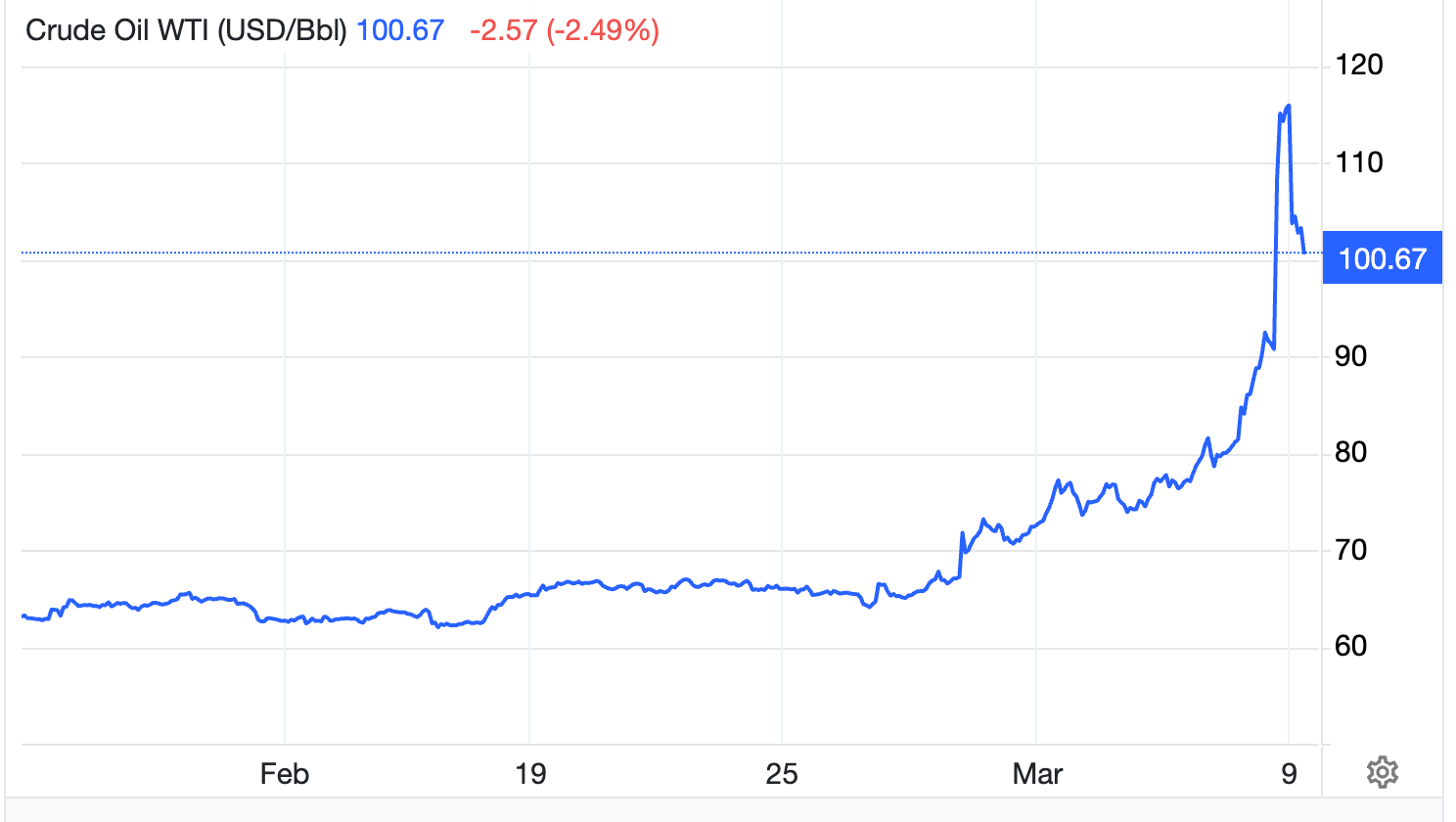
Just a brief note, because yesterday was a travel day and I didn’t even try to draft a full post — which was just as well, because oil markets went wild while I was airborne.
In a way that was odd, because the Strait of Hormuz has been effectively closed since the war on Iran began, with no obvious way to get it reopened quickly. As I showed in yesterday’s primer, continued closure of the Strait is a shock to world oil supplies bigger than the oil shocks of the 1970s. What changed?
Well, on Friday Trump called for UNCONDITIONAL SURRENDER, suggesting both intransigence and a tenuous grip on reality. Then the Iranians chose Khamenei’s son, reputedly a hard-liner, as the new Supreme Leader. These developments may have dashed the hopes of oil traders who still thought we might have cosplay regime change, Venezuela-style: The regime basically continues, but a new leader makes conciliatory noises and throws a bunch of money Trump’s way. That could still happen, but not for a while.
Time matters here. As the Strait remains closed, producers are shutting down, and this isn’t like turning off a tap that can be quickly restarted. There’s apparently a real nonlinearity here: a 2-week closure of the Strait has much more than twice the adverse impact on global oil supply as a 1-week closure. If this goes on for multiple weeks — and it’s easy to imagine that happening — oil prices, which retreated slightly off their highs early this morning, could go much higher.
Even so, premature to predict a global economic crisis. Prices now are roughly at Russia shock levels:
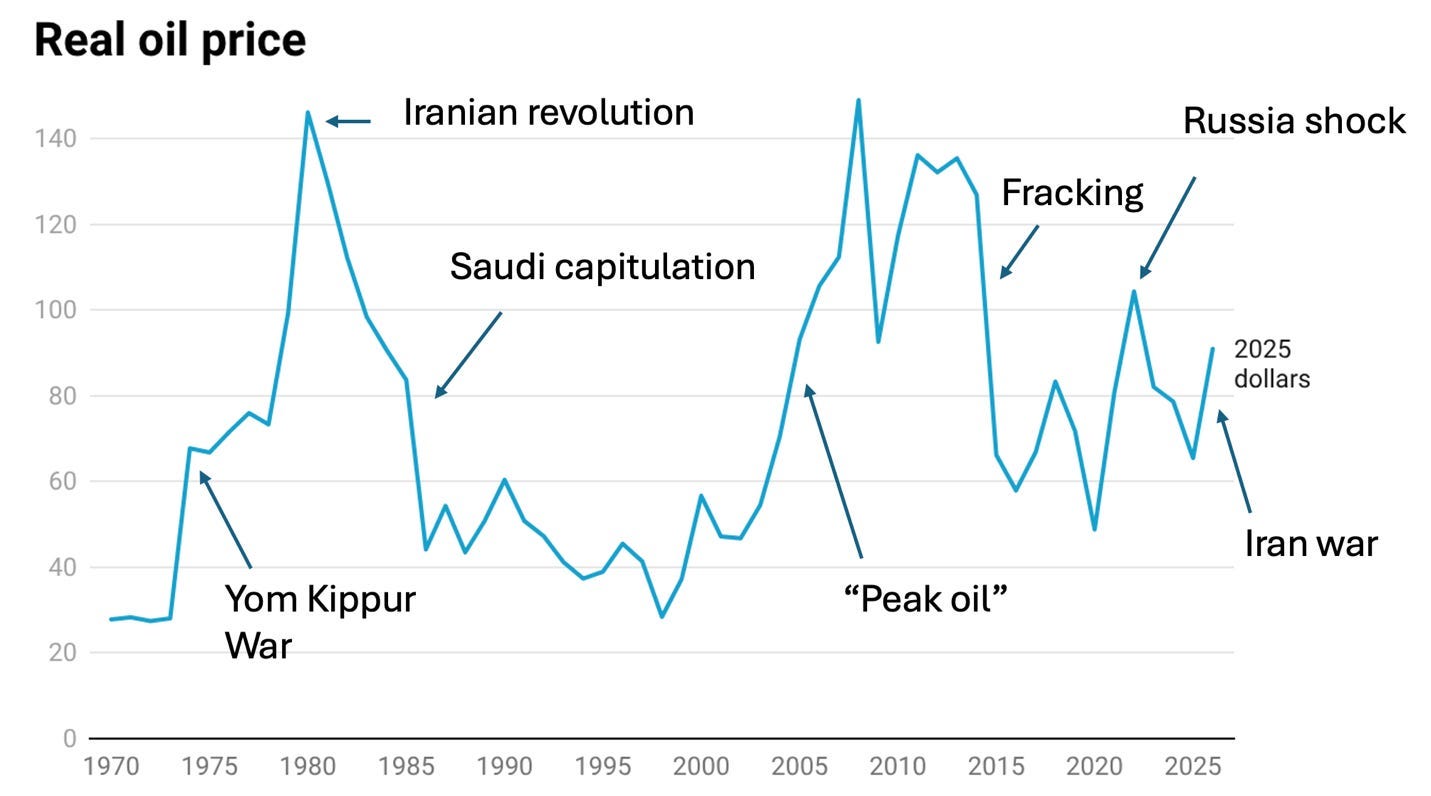
That shock was ugly but didn’t cause recessions in either the US or Europe. As I emphasized in the primer, advanced economies are much less vulnerable to oil shocks than they were in the 1970s.
But the situation is scary. And what’s even scarier is that the “warrior ethos” gang in the Trump administration seem to have been caught completely off-guard by the fallout from their adventure, even though the military and the intelligence community tried to warn them about the risks.
MUSICAL CODA
It's almost as if it's unwise to have the entire global economy dependent on a resource that is extracted from one of the most volatile parts of the world and concentrated in the hands of a corrupt oligarchs, especially when that resource is supplied freely by yhe ever-present sun and wind.
Americans may not care about Iranian dying but they do care about gas prices. Here's hoping sanity will leak into their government.